

Equine Sports Massage & Bodywork for Comfort and Performance
Help your horse move better, recover faster, and feel more balanced. Melanie provides tailored equine sports massage, Masterson Method bodywork, and wellness therapies to support comfort and performance.
Meet Melanie Spence, Certified Equine Sports Massage Therapist
Melanie is a certified Equine Sports Massage Therapist and advanced Masterson Method student with a passion for helping horses feel better in their bodies. Her work blends anatomy-based massage, gentle bodywork techniques, and a horse-led approach that supports long-term comfort and mobility.
Her experience includes myofascial release, deep tissue work, trigger point therapy, and targeted modalities that help horses of all ages, disciplines, and workloads move freely and recover efficiently.
Comprehensive Equine
Wellness Modalities
Each session is tailored to your horse’s needs using a blend of equine sports massage, Masterson Method bodywork, kinesiology taping, BEMER PEMF therapy, and red light therapy. These modalities support mobility, relieve tension, enhance circulation, and help horses feel more relaxed and balanced.
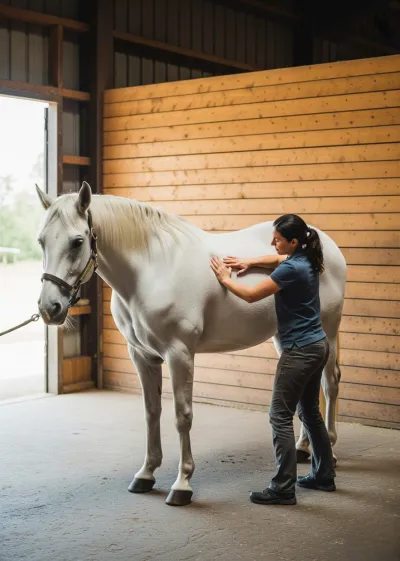
Equine Sports Massage Therapy
Enhance performance by keeping muscles supple and responsive, helping horses move more freely and efficiently.
Prevent injury by regularly identifying and addressing minor issues before they develop into more serious problems.
Promote faster recovery by aiding in flushing out toxins, reducing inflammation, and speeding up muscle repair post-exercise or competition.
Improve range of motion and flexibility because loosening tight muscles allows for better movement and joint mobility.
Relieve pain and discomfort and help manage pain from overuse, strain, or chronic musculoskeletal conditions.
Sports massage focuses on soft tissue—muscles, fascia, ligaments, and tendons—to improve performance and comfort. It helps release tension, soften restrictive patterns, improve flexibility, and support recovery after exercise or injury. Melanie uses myofascial release, stress point therapy, and targeted deep tissue techniques, guided entirely by the horse’s responses.
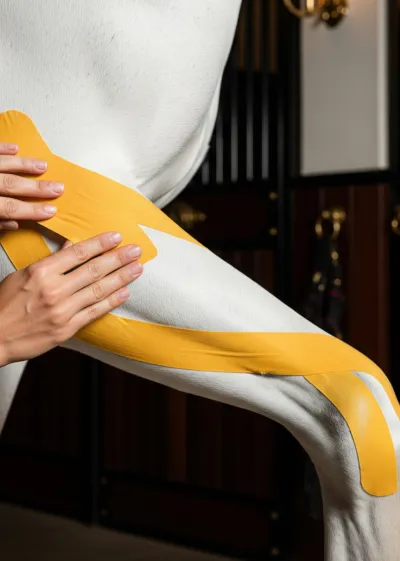
Support, Drainage, and Pain
Relief with Kinesiology Taping
Kinesiology taping supports muscles and joints without restricting movement. It reduces swelling, improves circulation and lymphatic drainage, enhances proprioception, and helps horses recover after training or injury. It’s often combined with massage for extended benefits.
Improves circulation and lymphatic drainage, which helps reduce swelling, inflammation, and bruising by promoting better blood and lymph flow.
Supports muscles and joints by assisting weak or fatigued muscles and stabilizing joints without limiting mobility.
Reduces pain and discomfort by lifting the skin slightly, which can relieve pressure on pain receptors and reduce muscle tension.
Enhances proprioception by increasing the horse’s body awareness, aiding in coordination, balance, and movement correction.
Aids recovery and rehabilitation and is often used post-injury or post-exercise to support healing and prevent re-injury.
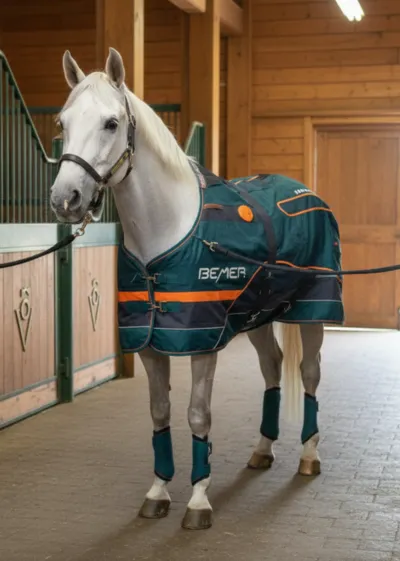
BEMER PEMF Therapy for Horses
The BEMER Horse-Set uses low-frequency PEMF to stimulate microcirculation and support cellular repair. This therapy helps reduce soreness, improve recovery, ease tension, and enhance overall wellness. Many horses become visibly relaxed during treatment.
Improves microcirculation and enhances the delivery of oxygen and nutrients while aiding in the removal of metabolic waste from tissues.
Supports muscle recovery by helping to relax muscles and reduce soreness after exercise or competition.
Reduces stress and tension, promoting relaxation that can lead to improved behavior and performance.
Accelerates healing as it can assist in the recovery from injuries by improving blood flow to affected areas.
Boosts performance as regular use helps keep the horse’s body in optimal working condition.
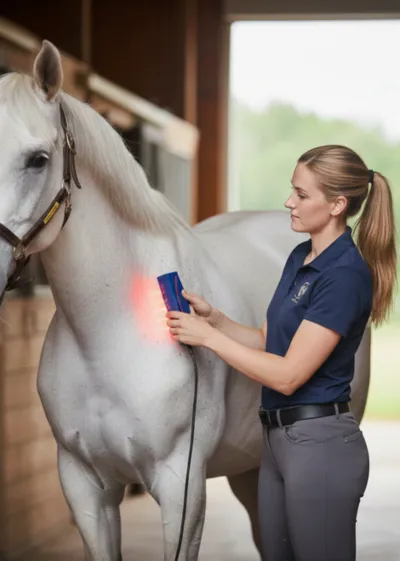
Equine Red Light Therapy
Red and near-infrared wavelengths support tissue repair, reduce inflammation, and relieve discomfort. Melanie uses red light therapy to address localized soreness, soft-tissue strain, wound healing, and chronic problem areas while complementing her hands-on work.
Promotes healing.
Reduces inflammation.
Relieves pain.
Testimonials


Jasmine Richards

Ever since starting the massage and stretching sessions, our horse seems more relaxed and agile. Truly impressive change with Thrive Equine Bodyworks!

Monica Chandler
After trying various options, Thrive's acupressure and stretching routines definitely top the list. Noticeable flexibility and calmness improvements in my horse. Worth exploring.

Thomas Krazinski
Regular wellness checks at Thrive Equine Bodyworks keep my horse in top shape. No fuss, just professional, preventive care that works. Highly recommended.
FAQs
Answers to Your Top Questions About Equine Wellness and Performance
How can equine sports massage help my horse?
Equine massage relieves tension, improves circulation, increases flexibility, and supports healthier movement patterns. Horses often become more balanced, responsive, and comfortable under saddle after consistent sessions.
What is the Masterson Method and how is it used in sessions?
The Masterson Method is a gentle, horse-led approach to bodywork that focuses on reading subtle responses like blinking, shifting, licking, or releasing tension. Melanie uses this to guide where and how deeply to work so each horse gets a tailored, comfortable session.
How often should my horse receive bodywork or massage?
Most horses benefit from sessions every 4–6 weeks. Horses in competition, heavy work, rehab, or dealing with chronic tightness may need more frequent support. Melanie can recommend a schedule based on your horse’s needs and workload.
Do these therapies replace my veterinarian, farrier, or trainer?
No. Equine bodywork complements veterinary care, farrier work, chiropractic care, and training. Melanie collaborates with your existing team to support whole-horse wellness and long-term comfort.
What should I expect at the first appointment?
Each session includes a brief history review, movement observation, and hands-on work tailored to your horse’s comfort. Melanie explains what she sees, how your horse responds, and what areas may need ongoing attention.
Which horses benefit the most from these therapies?
Performance horses, older horses, horses returning to work, and horses showing stiffness, uneven movement, soreness, or behavioural changes often see meaningful improvements. These therapies also help maintain comfort for retired or lightly-ridden horses.